

Transformer oil testers are some of the fastest and most affordable methods for evaluating the state of transformer. After all, transformer oil contains nearly 70% of diagnostic information about the state of equipment.
In order to maintain the optimal state of your transformers in various industries ranging from public utility to industrial power sectors, transformer oil analysis can help you understand the current performance issues or prevent malfunctions and potential problems in the future.
In this article, we are going to take you through the special aspects of transformer oil testing and the reasons why it is important to carry out a transformer oil analysis.
Role of dielectric liquid in transformers
Transformer oil, also known as insulating oil, is a special liquid characterized by strong electrical insulating properties and stability at high temperatures. This type of oil is mainly used in oil-filled power transformers, performing a number of important functions. These include ensuring proper insulation, reducing the probability of arc and corona discharges, as well as effective heat removal, i.e. acting as a coolant to maintain the optimal transformer performance.
Furthermore, the oil serves to protect the transformer core and windings, preventing the direct interaction of ambient oxygen with cellulose, thereby minimizing the oxidation process. It also helps in removing heat from the core and, ultimately, provides some insight into the state of transformer.
Transformer oil properties
In order to determine the suitability of transformer oil for use, several types of properties should be factored in: electrical, chemical, and physical.
The electrical properties of insulating oil include resistivity, dielectric strength, and dielectric loss tangent.
Dielectric strength, or breakdown voltage (BDV), indicates the ability of oil to withstand electrical voltage without degradation. A low BDV indicates the presence of moisture and conductive substances. BDV is measured by means of electrodes immersed in the oil inside an enclosed cell and by gradually increasing the voltage until sparking has occurred. A good-quality oil should have a BDV of at least 30 KV.
Resistivity characterizes the DC resistance of oil per unit volume. It should be high both at ambient temperature and at elevated operating temperatures. The minimum required values at 27 °C and 90 °C are 1500 × 10¹² Ω·cm and 35 × 10¹² Ω·cm, respectively.
Dielectric loss tangent is indicative of imperfect dielectric properties. A high tan delta indicates the presence of contaminants that reduce resistivity. A low tan delta value is preferable for effective insulation.
Chemical properties include water content, acidity, sludge content, analysis of furanic compounds (cellulose aging), and dissolved gas analysis (DGA). Water content, which adversely affects the dielectric properties of oil and paper insulation. Hygroscopic paper absorbs water from the oil, reducing the insulation efficiency. Water solubility increases as oil temperature rises, which affects the release of moisture from the paper.
Acidity, which accelerates oil oxidation, damages the insulation and contributes to occurrence of rust. An acidity test measures the level of acid contaminants and is expressed in mg KOH required to neutralize the acid per gram of oil.
Physical properties include interfacial tension, viscosity, and color.
Interfacial tension (IFT) characterizes the attractive forces between water and oil molecules. A high value indicates a high quality of oil, while oxidizing impurities cause its downgrade.
Flash point is the temperature at which oil vapors form a flammable mixture with air. A high flash point (>140°C) reduces the fire safety.
Pour point is the minimum temperature at which oil flows. In cold climates, it is vitally important to ensure proper oil circulation and cooling in transformers. A low viscosity contributes to oil circulation and cooling. It is crucial to keep the viscosity stable in response to temperature changes.
Transformer oil analysis
There are 17 common transformer oil test methods in total. Some of those are part of the required routine tests, while others, such as detection of furans and corrosive sulfur, help in obtaining further insight into diagnostic evaluation, or are required for certain certifications.
Various tests defined by international standards, such as the American Society for Testing and Materials (ASTM), measure different properties of oil. The most common tests apply to hydrogen level, moisture level, dielectric breakdown voltage, and dielectric loss tangent. These tests help you determine the suitability of oil for further use, identify the need for regeneration or filtration, reduce costs and prevent premature failures.
The appropriate insulating oil tests and the targeted diagnostic evaluation allow you to do the following:
- Detect faults and malfunctions;
- recognize faults at an early stage and thus prevent them from occurring;
- plan maintenance activities and evaluate the state of the entire transformer fleet;
- maximize the performance of transformers and extend their service life.
GlobeCore transformer oil testers and their specifications
GlobeCore has developed transformer oil testers, which mean instruments to measure the main parameters of transformer oil.
Water content
 Moisture content in transformer oil is one of the most critical parameters, as water significantly reduces its insulating properties and may cause corrosion of metal components. The formation of water emulsion is particularly dangerous, as it can lead to accelerated degradation of insulation materials.
The GlobeCore TOR-1 transformer oil moisture tester enables accurate determination of moisture content, even at very low levels. The device uses a capacitance sensor to measure moisture and features a compact design, allowing measurements to be taken directly at the transformer site. This makes it well suited for on-site monitoring and rapid detection of moisture-related issues.
Hydrogen content measurement
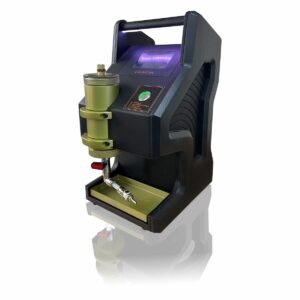
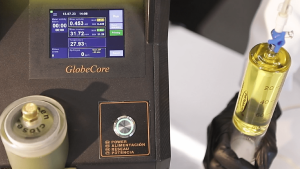 Hydrogen is one of the most important gases used in chromatographic analysis of transformer oil. The formation of this gas may indicate the occurrence of electrical defects. However, a comprehensive chromatographic analysis is time-consuming. As a solution, GlobeCore offers a TOR-2 transformer oil hydrogen analyzer with express testing capabilities. The instrument is portable and can be used in the field. It allows for fast decision-making on site regarding the transformer maintenance.
Breakdown voltage
Breakdown voltage indicates the maximum electrical potential that transformer oil can withstand without losing its properties. It is a parameter that helps in ensuring the reliability and safe operation of a transformer under high-voltage conditions.
The GlobeCore TOR-60, TOR-80, and TOR-100 breakdown voltage testers for transformer oils specialize in measuring this parameter. The instruments are portable and capable of performing tests at 60, 80, and 100 kV, respectively. The measuring process is automated, the instruments ensure accurate measurements with a minimum measurement tolerance and may also be equipped with a battery, which makes it possible to analyze transformer oil in the field, if required.
Dielectric loss tangent
Dielectric loss tangent represents energy losses in transformer oil caused by contamination and aging. An increase in the dielectric loss tangent indicates deterioration of oil quality and the need for purification or replacement.
The GlobeCore TOR-3 tan delta tester is designed for accurate measurement of this parameter. The unit is portable, allowing easy movement within the laboratory and enabling on-site assessment of oil condition. It also provides automated measurement and data storage.
Advantages of GlobeCore TOR transformer oil testers
TOR transformer oil express testers ensure high analysis accuracy, which is essential for the safe and efficient operation of transformers. Their compact and ergonomic design makes them easy to transport and operate, especially in confined spaces. Optimized maintenance planning reduces the risk of unexpected failures and extends transformer service life. The instruments are suitable for both laboratory and field use, enabling oil sample analysis directly on site.
Regular use of transformer oil testers enables effective identification of potential issues, helping to prevent alarm conditions and maintain power supply reliability.
 OIL MOISTURE METER ...
 Hydrogen and Moisture ...
 Breakdown Voltage Tester ...
 EN
EN  FR
FR