
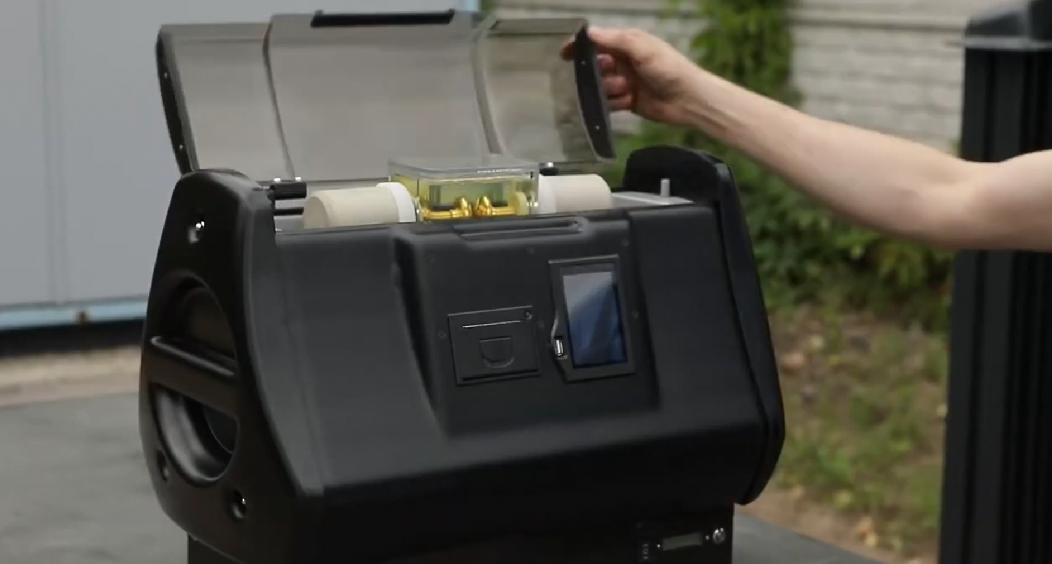
A BDV tester helps in interpreting the important information about the transformer status. Whichever type a dielectric medium is — mineral oil, silicone oil, synthetic ester, or dielectric liquid, understanding its condition will contribute to maintaining the stable operation of equipment.
Routine sampling and testing of oil can help in early detection of potential problems, such as overheating, arcing, as well as insulation aging, contamination, and degradation. Having the test results available, professionals can take timely measures to maintain the proper performance, including, but not limited to filtration, dehydration, or change of oil.
What parameters are typically measured during transformer oil analysis?
Transformer oil is tested in accordance with international industry standards, including ASTM D3612, IEC 60422, IEEE C57.104, and CIGRE guidelines. These documents provide detailed procedures for conducting analyses and interpreting test results.
Among the key oil parameters considered by professionals are:
- breakdown voltage — the voltage a dielectric can withstand without failure;
- acid number — indicates the presence of acidic compounds;
- moisture content — one of the most critical parameters affecting operational reliability and a key indicator of oil aging;
- flash point — reflects the fire safety characteristics of the dielectric fluid;
- interfacial tension — indicates the presence of polar contaminants that reduce molecular cohesion;
- dissolved gas analysis (DGA) — enables detection of gases dissolved in oil, indicating potential faults in the transformer;
- furan analysis — determines the presence of furan compounds formed as by-products of paper insulation degradation.
What breakdown voltage means and why this parameter is important for transformer oil
In order to understand the concept of breakdown voltage, it is important to first consider the dielectric strength of oil. This parameter defines the ability of the oil to withstand high voltage without losing its insulating properties. Breakdown voltage corresponds to the point at which the dielectric medium loses its insulating properties and becomes conductive.
During testing, two electrodes are immersed in the oil sample, and a voltage is applied with a gradually increasing magnitude. The voltage at which the oil loses its insulating properties is defined as the breakdown voltage. According to IEC standards, the minimum acceptable breakdown voltage for transformer oil is 30 kV.
What affects a change in the breakdown voltage of transformer oil
The main factors that affect the breakdown voltage of transformer oil:
- moisture content: water forms conductive paths in the oil, reducing its breakdown voltage value;
- solids: dust, dirt, metal particles, insulation fibers adversely affect the breakdown voltage value;
- aging and oxidation: natural processes of aging and oxidation impair the insulating properties of oil;
- thermal load: high operating temperatures, excessive stress, and arc discharges accelerate the oil degradation and adversely affect the breakdown voltage value.
As a rule, the main reason for a low breakdown of dielectrics is a variety of impurities. For example, the dielectric factor of water is 80; in solid dielectrics, this value is close to 7, and in transformer oil, it’s close to 2,3. When exposed to an electric field, impurities are attracted to the electrodes which reduces the breakdown voltage of oil, leads to heat release, partial boiling and breakdown of the dielectric.
TOR-60, TOR-80, and TOR-100 BDV testers
In order to maintain stable operation, it is important to test transformer oil in the event of each maintenance. The test is carried out by applying a high voltage of up to 100 kV from transformer to oil. The voltage is gradually increased until a breakdown has occurred in the oil. Previously, this value was recorded manually, however technology allows doing that more conveniently.
GlobeCore offers a range of equipment for this type of testing, including BDV testers such as the TOR-60, TOR-80, and TOR-100. These instruments are designed for accurate measurement of breakdown voltage in mineral oils, ester-based fluids, and silicone insulating liquids.
TOR-60 performs testing with a voltage of up to 60 kV; TOR-80 — up to 80 kV, and TOR-100 — up to 100 kV, respectively. The model housings are made of robust, impact-resistant plastic material which allows testing in a laboratory setting and at the transformer operation site.
A transparent cover ensures visibility inside the cell, and protective equipment prevents contamination. At the same time, if the cover is open, the test voltage rise is blocked which allows avoiding a possible electric shock.
The instruments comply with all the global test standards, but can be customized by the user in accordance with new requirements. The voltage measurement tolerance after a test cycle does not exceed 1%.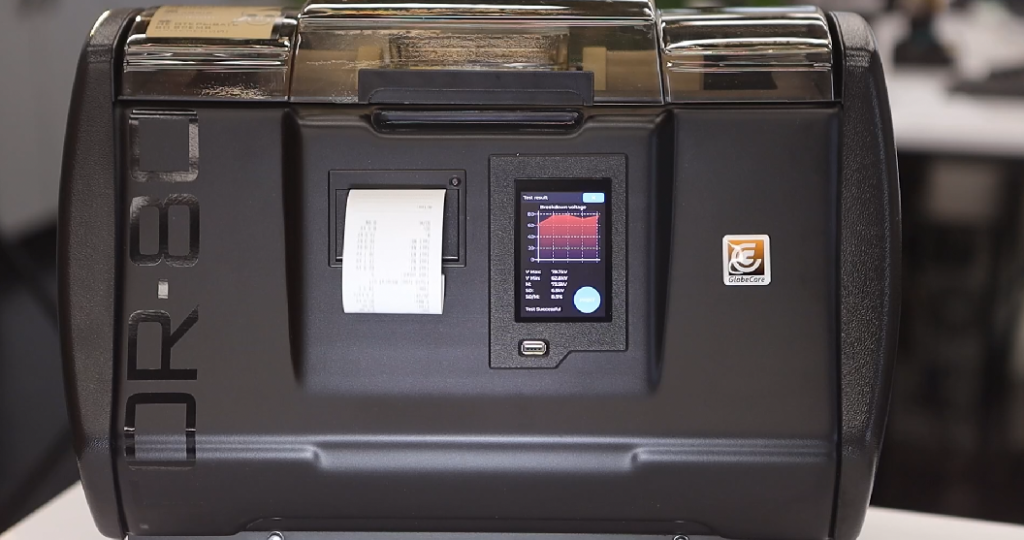
Advantages of TOR BDV testers
- Voltage removal rate: the high voltage removal time after a breakdown does not exceed four microseconds. It is faster than all other similar instruments which guarantees safe operation.
- Compact dimensions and portability: TOR instruments have compact dimensions and built-in handles for ease of moving around. This ensures convenient use both in a laboratory setting and in a variety of indoor spaces.
- High measurement accuracy: the breakdown voltage measurement tolerance after a test cycle does not exceed one percent which guarantees accurate testing results.
- Convenient use and data storage: measurement results can be stored in the form of a paper slip using an integrated thermal printer, or transferred to a PC via a flash drive. This allows further processing and visualization of data.
- The possibility of use in the field: if necessary, the instruments can be equipped with rechargeable batteries which allows using them even without access to power supply.
- Checking and testing before use: before sending to laboratories of electric power companies, all the instruments are checked by means of real oil samples and high-precision kV meters.
Owing to these advantages, TOR instruments manufactured by GlobeCore ensure efficient and reliable transformer oil testing which is an important aspect of ensuring the trouble-free operation of electric power systems.
 Breakdown Voltage Tester ...
 Breakdown Voltage Tester ...
 Transformer Oils Breakdown ...
 EN
EN  FR
FR